
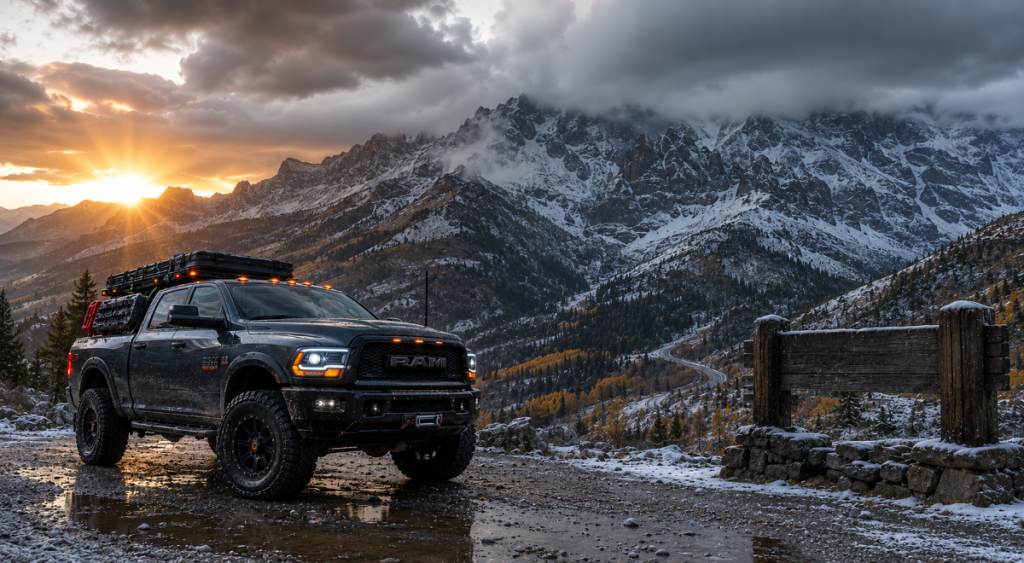
Anyone who lives around Powell knows that the weather forecast here is more of a gentle suggestion than a guarantee. You can start your morning with clear blue skies in town, and by the time you hit the top of the Chief Joseph Scenic Byway or head up into the Bighorns, you’re staring down a sudden whiteout or a torrential downpour.
Driving in northwest Wyoming demands a lot from your vehicle. If you want to tackle our mountain passes with confidence, you can’t just assume your 4×4 is ready, you have to know it is.
Before you pack up for your next weekend trek, make sure your truck or SUV checks these four critical boxes.
1. The Brake Check: Don’t Let the Descent Catch You Off Guard
Heading up the mountain is the fun part; coming down is where your vehicle earns its keep. Riding your brakes down steep grades generates massive amounts of heat, which can lead to brake fade (a terrifying moment) where your pedal feels spongy and loses stopping power.
- What to look for: Listen for high-pitched squeals, grinding noises, or a steering wheel that vibrates when you slow down.
- The Prep: Have a technician check your pad thickness and ensure your brake fluid isn’t contaminated. If you’re driving a newer Ford Super Duty or RAM 2500, make sure you know how to properly utilize your exhaust brake and tow-haul modes to let the engine do the heavy lifting.
2. The 4WD Reality Check: Test It Before You Need It
Don’t wait until you’re halfway up a muddy switchback or caught in an unseasonal mountain flurry to find out your four-wheel-drive system is throwing an error code.
- The Reality: Vehicles that sit in 2WD all summer can experience stiff actuators or vacuum leaks in the 4WD engagement system.
- The Prep: Find a safe, gravel stretch of road and shift through your 4WD ranges (4-High and 4-Low). Listen for smooth engagement. If there’s a delay, a loud clunk, or a flashing dash light, it’s time to bring it into the shop.
3. The Battery: Altitude and Temp Drops are Brutal
Wyoming winters get all the credit for killing batteries, but sudden temperature drops at high elevations can easily strand an aging battery. If your battery is more than three or four years old, a cold night at a mountain campsite might leave you clicking your tongue instead of turning over the engine.
🛠️ Local Pro-Tip: Elevation changes don’t just change the view; they test your vehicle’s electrical connections. Vibrations from rough washboard roads can loosen battery terminals over time. Give them a quick wiggle to ensure they’re tight and free of corrosion.
4. Tires: The Only 4 Points of Contact
Your Jeep’s lockers or your RAM’s torque won’t mean a thing if your tires can’t grip the terrain. Wyoming passes require tires that can handle rapid transitions from dry pavement to slick mud, gravel, or slush.
- The Penny Test: Insert a penny upside down into your tread. If you can see the top of Lincoln’s head, you have less than 2/32″ of tread depth—meaning your tires are legally bald and unsafe for mountain driving.
- Pressure Drops: For every 10-degree drop in ambient temperature, your tires can lose about 1 PSI of pressure. Going up in elevation changes things even further. Always check your spare tire before you leave town!
Let Fremont Motor Powell Prep Your Rig
You shouldn’t have to white-knuckle your way through the mountains. Whether you’re driving a rugged Jeep Gladiator, a Ford Bronco, or a dependable family SUV, our factory-trained technicians know exactly what Wyoming roads demand.
Before your next mountain adventure, schedule a Multi-Point Safety Inspection at Fremont Motor Powell. We’ll check your brakes, test your battery, inspect your drivetrain, and make sure you’re ready for whatever the Bighorns throw at you.
👉 Schedule Your Service Appointment Here


